
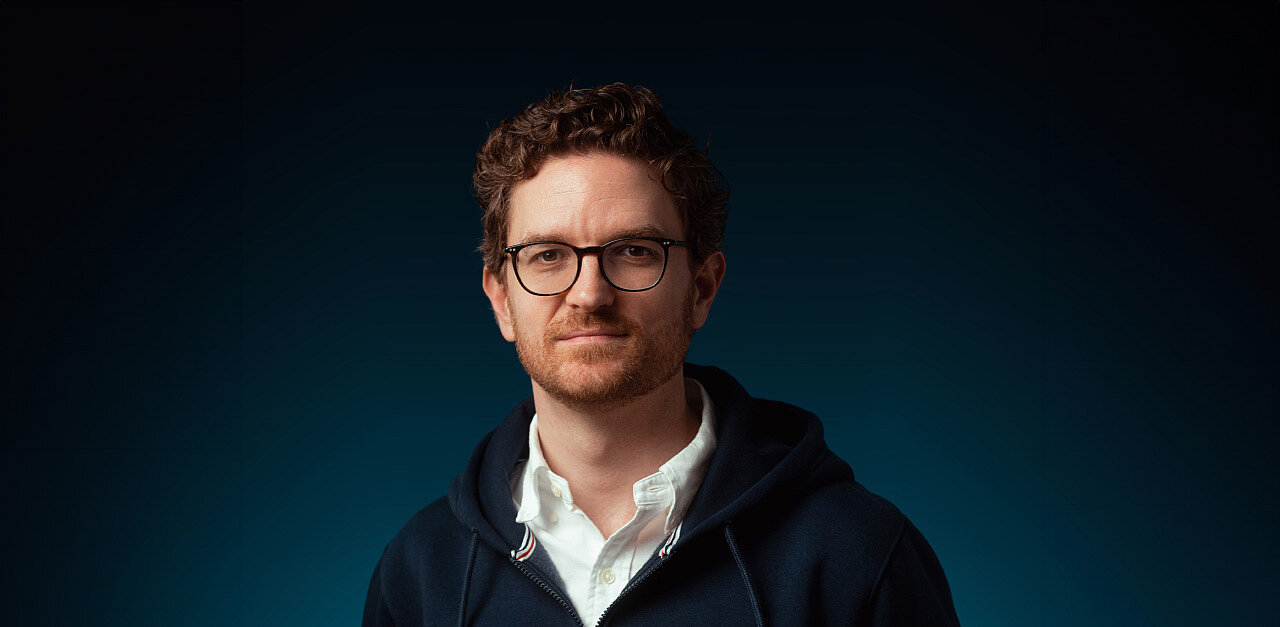
It’s been a while. Back then, Dr. Michael Jobst was part of the attoworld-team, working on laser development and attosecond technologies. After completing his doctoral thesis, he moved into the private sector. In a conversation with Thorsten Naeser, he talks about his varied career and explains what the world’s largest quantum fund is all about.
Hi Michael, we haven’t heard from you in a long time. Can you briefly tell us what you were doing back then as part of the attoworld-team and as an IMPRS-APS student?
At the Max Planck Institute for Quantum Optics, my colleagues and I tripled the frequency of an infrared laser and then fired UV/XUV pulses at high-purity ozone. By the way, ozone is extremely explosive. Things went wrong once when our cryogenic trap accidentally got too cold and produced solid ozone instead of the liquid ozone we normally had safely contained. I was also involved in the measurements of surface dynamics. Overall, this was, so to speak, the second generation of attosecond experiments: complex sample structures that require more stability in the laser system than we originally had. We invested a lot of time in improving the technologies: developing novel hollow-fiber optics, beam stabilization systems, and new XUV targets.
After completing your dissertation, you moved into the private sector. What prompted you to do that?
The work at the MPQ was extremely technology-focused. Somehow, there was always something missing for me. I wanted to expand my skill set to include the business dimension: business, strategy, and financial perspectives. That’s why I joined the Boston Consulting Group. There, I had the opportunity to work on projects across many industries: banking, energy, white goods (refrigerators, washing machines, etc.), personal care (diapers), pharmaceuticals, and medtech. These provided fascinating insights into how the world works. I can recommend this even to die-hard scientists.
Now you’ve landed at the company Vsquared. What do you do there?
I really enjoyed the Boston Consulting Group. The only thing I missed was the proximity to technology. I’ve always enjoyed working at the edge of what’s possible the most. No one can tell you how to conduct your experiment because you’re the only person in the world who can do it. Now I wanted to combine this way of thinking with an economic perspective. That’s why I joined Vsquared. Vsquared is a deep tech venture capital fund that invests exclusively in very young and technologically cutting-edge companies. For example, in rockets, quantum computers, brain-computer interfaces, and so on. These companies are pushing the boundaries of what’s possible just as we did back in the lab. But they then commercialize and scale the insights they’ve gained.
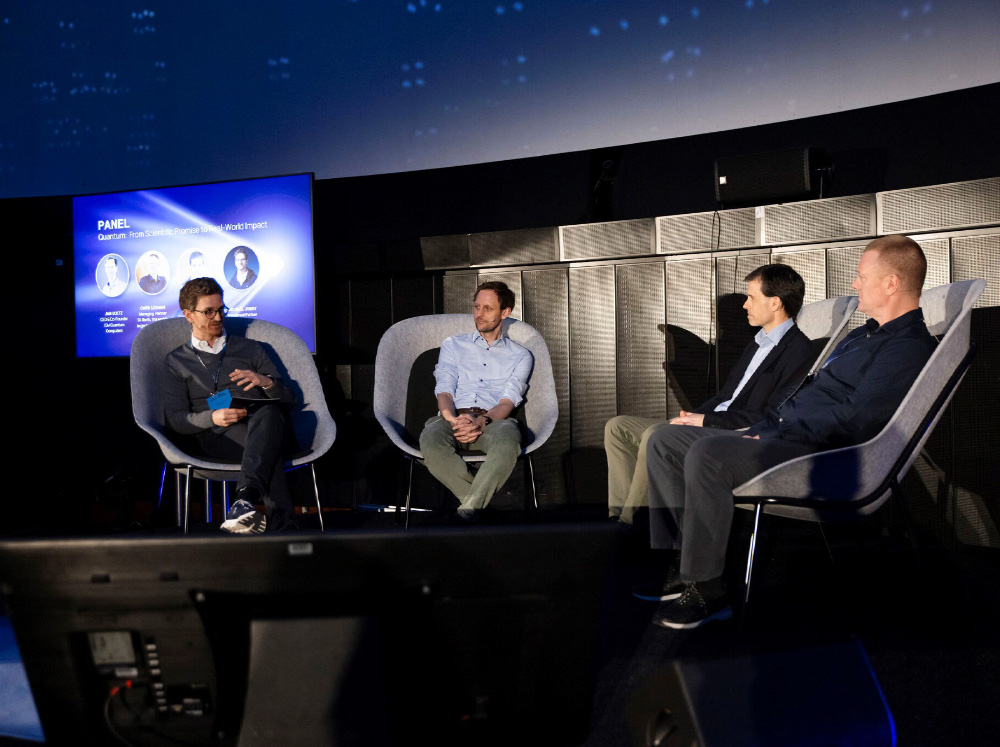
As you can imagine, it’s not enough to just transfer the money. These young companies and their (sometimes inexperienced) founders benefit enormously from further support and assistance with issues like fundraising, corporate structuring, or simply networking with other players in the ecosystem. A particular success for me was that I played a leading role in helping to launch the world’s largest quantum fund: 55North ( 55n.vc ). We also explained the dynamics in a podcast.
Can you briefly explain the quantum fund to us here?
I always use the term loosely. Strictly speaking, one should say “a venture capital fund that is 100% focused on quantum technology.” We invest in companies that will make the quantum computer a reality, for example companies like IQM or kiutra (cooling solutions). There’s an incredible amount happening in this field!
What opportunities do quantum funds offer investors?
Quantum technology has enormous economic potential, but the topics aren’t accessible to most investors. I would argue that even most professional investors have difficulty fully assessing these opportunities. We have absolute specialists on the 55N team with many years of in-depth experience – despite my PhD in physics, I’m the generalist on the team.
You’ve already had quite a varied professional career. What else would appeal to you?
In the U.S., a large portion of economic output comes from companies financed by venture capital, such as Google, Apple, Anthropic, or OpenAI – almost all tech-related companies, in fact. That’s not the case in Europe. This is becoming an increasingly significant problem for us: Europe needs more large and truly innovative companies! And the biggest bottleneck lies in growth financing. This is where I’d like to make a contribution.
Pictures: Vsquared


