
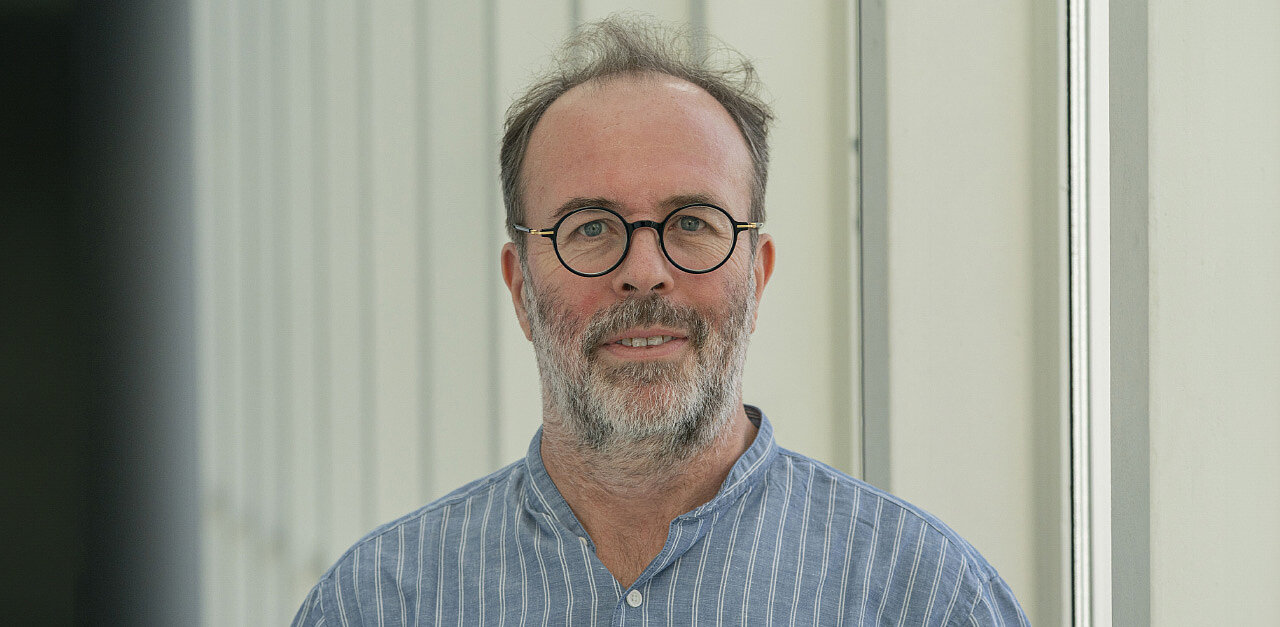
Argentina, Germany, Singapore, United States, Spain, Czech Republic, China – Marcelo Ciappina’s career has taken him all around the world. Originally from Argentina, our former colleague is now a full professor at the Guangdong Technion-Israel Institute of Technology in Shantou, China. Between 2014 and 2016, Marcelo was a postdoctoral fellow in the group of Vladislav Yakovlev at attoworld. Back then, he was working on atto-nano optics – combining nanostructures with attosecond science. In this interview with Nina Beier, Marcelo shares how his research focus has shifted, while he continues to pursue science at the interface of different fields of physics.
Dear Marcelo, thank you for taking the time for this interview. Can you tell us a little bit about your current research?
Currently, we also continue doing ultrafast science. But now we are trying to combine quantum optics with strong field physics. Typically, in attosecond science, the driving fields of the lasers are kind of waves, classical waves. But you can describe the same process using photons. Of course, you have many, many photons. But the idea is: Can we see some signature of these photons in the strong field processes? This is kind of new, but there are experiments planned on trying to use this photon light – “quantum light”, we call it – to drive a strong field process.
What would be the goal of that?
One idea is to try to use these many, many photons you have available to encode information. Typically, when you send a message, you need to copy this message many times to correct errors. If you have many of these photons available, you can encode this message with redundancy. This is one of the goals, and another one is to try to understand the physics of the problem, because we are describing everything behind the lens of quantum mechanics. I mean, there are many challenges there.
What kind of challenges?
In quantum optics, few-photon sources are typically generated using cavities coupled to quantum emitters. But this is because in the past, the lasers were not so strong. Now you have strong lasers, i.e. billions of photons available, and one problem is how to find the quantum signatures that are hidden there. The classical description using electromagnetic waves is enough to model all the strong field processes. Therefore, at first sight, the search for quantum features could appear irrelevant. One of the first challenges might be to try seeing some signatures of the quantum nature of the process and later use these to drive nonlinear phenomena.
As a theorist, how do you approach the collaboration with experimentalists?
I like to collaborate with people. Typically, experimental colleagues come to us with a result that they don’t understand. The other way is to propose something from the theoretical point of view to the experimentalists. This is more difficult because they usually plan experiments ahead for several years. Normally, it works in the other way. They measure something, and they want some theoretical/modeling support.
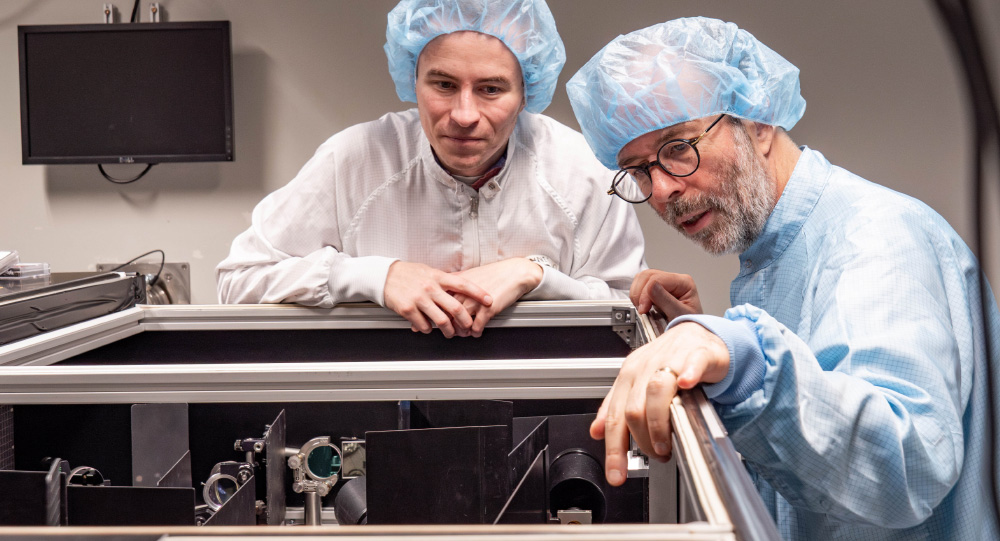
Marcelo Ciappina during a lab tour with Johannes Blöchl while visiting the MPQ in November 2025.
Is there currently any collaboration with attoworld or with your former colleagues at attoworld or MPQ?
With my former colleagues Matthias Kling and Peter Hommelhoff, I have collaborated in the past, and now, in this new topic, we are trying to find some new things to do. I mainly collaborate with people from Spain, but also from Greece, Paris, Denmark, Finland, and UK. I really enjoy working with people because I learn from them – especially when they come from different cultures and bring different viewpoints.
Are there currently any possibilities to become part of your team?
Of course, we are looking for people. We are a new place. We have plenty of resources, but we need manpower.
How big is your team right now?
Now, we are four people. But there are plans to build a laboratory for ‘extreme quantum optics’, i.e. quantum optics with strong lasers. So, anyone who wants to have an experience in China is more than welcome.
Talking about China – what is it like living there?
It’s a big shock in many aspects. I mean, I come from a very small town in Argentina. Compared to that, everything in China is huge. A lot of cars, a lot of bikes. Big buildings. The train station is huge. Everything is very, very big. The other aspect is the changes. Everything changes really quickly. From one year to another, you cannot distinguish the place. I mean, it goes from nothing to huge buildings in the blink of an eye (almost literally). For example, my institute was built in a mountain. So, if you were there five years ago, there were several mountains and now it’s a university. But it’s not bad. We are in an international environment. And the living costs are really cheap compared with Europe.
What made you move to China?
I was looking for a permanent job, which is challenging in academia. I applied for a professorship position and I got the interview. And after some time, they offered me a very good opportunity in terms of money and resources. So, I said “Okay, I will try”. It was by a long shot much better than I expected, honestly.
What would be your advice to young researchers who are just starting out?
I see my work more like a hobby. I like reading papers, writing codes. I don't see this as like a “real job”. So, the advice would be ‘try to do what you like’. You need to follow your feelings. You need to enjoy what you do... industry, academia, teaching – whatever it is.
Apart from research, what do you like to do in your free time?
I am kind of a runner; I try to do it every day. And I like listening to music. I was DJing when I was young, and I enjoy listening to music, specifically 80s music.
Interview: Nina Beier
Photos: Nina Beier & Thorsten Naeser


